


Back in the late eighties and early nineties, Manchester was a city transformed by its music scene.
During a fleeting but potent time, music, drugs and fashion all became entangled to make the city - nicknamed the Madchester scene - the place to be.
"It reached a stage where about a third of the office would go to Manchester every Friday night," noted a ex-music press writer and radio presenter. "They would simply relocate north and you wouldn't see them again until Tuesday or Wednesday the next week, looking like they'd had quite a good time."
That celebrated 'second summer of love' - as it became known - burned bright for a number of years, spanning iconic venues like the Hacienda, before fading... setting the stage for the Britpop movement.
Fast forward 35 years, Manchester is arguably experiencing a renewed moment, from a sonic perspective, as a host of creatives, audiences and execs once again head north.
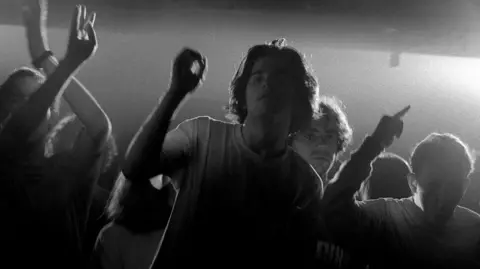
A Convergence of Major Events
Last month, the city was the venue for the prestigious BRITs - taking the event out of London for the very first time in its near 50-year history.
On Thursday, the state-of-the-art Co-op Live venue - which has already been scheduled for the Brits again for next year - will additionally host the MOBO Awards for the first occasion.
Starting Wednesday and concluding Saturday, the Radio 6 Music Festival makes its home at its now permanent 0161 residence.
Does this mark Manchester reclaim its prominence as the UK's music capital?
'Change in Dynamics'
The city-region's Mayor thinks so.
He observes that "at last, there is a movement of influence, with momentum shifting into Manchester".
He adds: "It isn't only those large-scale awards coming, a growing amount of up-and-coming creatives is deciding to establish Greater Manchester their headquarters."
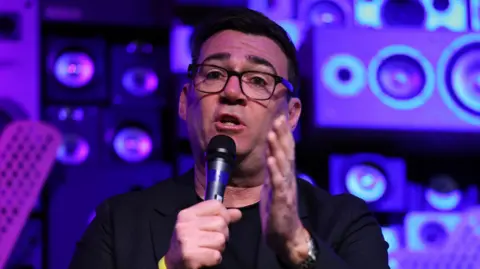
He praises the music industry body which runs the Brits for having organized a string of community-focused satellite events in the city.
"The awards ceremony offered more than a simple spectacle," he says. "They put ladders down into our communities."
The leading trio of music labels are all still centered in the capital. The mayor says he would "love a big label to have a significant operation here in the city".
His proposal last week of the introduction of late-night bus services from the city centre is, according to a spokesperson for venue advocacy, "the best thing" for music fans and venues alike.
'Magic Formula'
Even though some parts of Manchester are still among areas facing challenges, it is considered to have one of the most rapidly expanding city-region economies in the country.
A venue director who moved up from London five years ago, having previously worked for a major London arena, said bringing the Brits to Manchester was "the top priority" when opening the largest new indoor venue in Europe.
"It's given it, definitely, a new lease of life, being up here," she said of the event, which allegedly drew a record global audience.
While big events can be "hidden" in a huge city like London, she says, the "special vibe" that Manchester brings - including art trails and pop star tram announcements - "really came out".
The "off-the-scale impact" of having the Brits "adopted by" Manchester was also emphasized.
The "top-tier venues", combined with its "historic artistic dynamism" and musical heritage made the move north feel like "a logical development".
'Enduring Progress'
This is not the first time the MOBOs have left London. Over the past decade, it has made its way up north to the likes of Leeds, Liverpool and Newcastle.
Northern artist Aitch is up for best hip-hop artist at this year's ceremony in his hometown, where he will also do a set.
Aitch was spotted as a youngster by a city entrepreneur, while rapping at a local open mic night.

He decided early on to resist the pull of London and to run his music business from Manchester, a place which he said "possesses a unique quality" that "no other city can replicate".
"The key focus must be on lasting development," he said.
He believes the recent buzz around the city has been "testament" to the decision he made to stay, a decade ago.
'Intergenerational'
But there is still a steep hill to climb, as a Manchester-based vocalist notes.
The musician on the lineup thinks it's great that Manchester is "getting a light shone on it". But, she asks: "How many northerners are actually getting nominated?"
A solitary of this year's in-competition Brit Award nominees actually was from Greater Manchester.
And beyond Aitch, there are only a few of northerners in contention for a MOBO this year too.
The artist thinks there is still a "gap" between the support of grassroots music infrastructure in the north and south.
"She also cautions about the 'risk' of 'merely transplanting something out of London and just dropping it into Manchester and assuming it's going to work' when 'the culture is completely different'."
If the music world is relocating from London again this week, then it needs to "reinvest in the local area", she adds, and not just pay it "empty words".

The singer will perform at a well-known city venue for the event's showcase night. She has recently performed with Manchester stalwarts and underlines the "really intergenerational" and "collaborative" make-up of the city.
"I am undoubtedly a member of a fresh Manchester movement, but that's been mentored by the old guard, for sure."
Events like last month's grassroots event were "fantastic", she adds, at "attempting to become part of the local scene of the city".
The space holds gigs but also runs music education programmes, training people for careers in jobs like live sound.
A venue director agrees it's great for Manchester to be getting these huge global ceremonies, but at the same time he says: "I'm not sure that that so-called resurgence ever went away from Manchester".
"A steady progression has been happening of entrepreneurial behavior in this city for 50 years."


